
Is it October already? With another year of nesting behind us, it’s time to look at how we did on the trail. Our amazing team of volunteers worked hard at visiting the sites, monitoring for issues, and collecting data.
Now that the babies have fledged, we can move on to showing how they did. But first, the weather.
Climate Info for the 2026 Nesting Season
We started out 2026 with some cold, winter weather. It’s the Buffalo region, so that isn’t too unusual. Once March rolled around, we saw warmer than normal weather. That is great if you’re on Spring Break, not so great if you’re readying nest boxes.
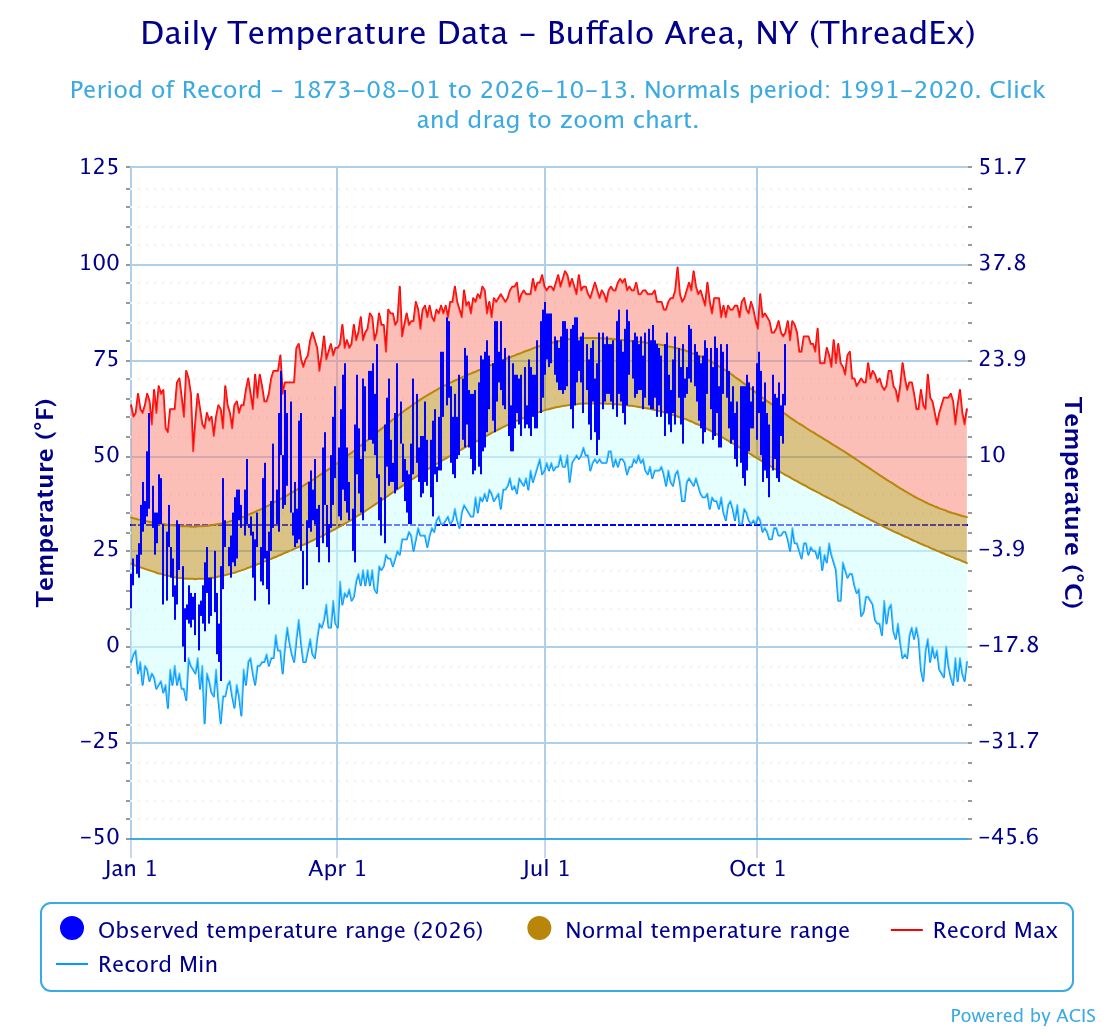
Climate graph provided by the National Oceanic and Atmospheric Administration and www.weather.gov.
Warm weather can encourage the bluebird to mate and lay eggs early in the nesting season. Here in Buffalo, we almost always have cold weather through March and much of April. By the end of March, the temperatures plummeted, compromising any early nesters. This region doesn’t have as long of a nesting season as those in the southern U.S., but many bluebirds have enough time to fledge two broods.
The summer produced warmer days that made up for the spring chill. Our region actually had six days where we tied or broke record high temperatures. We also had six days where we broke precipitation records during the nesting season.
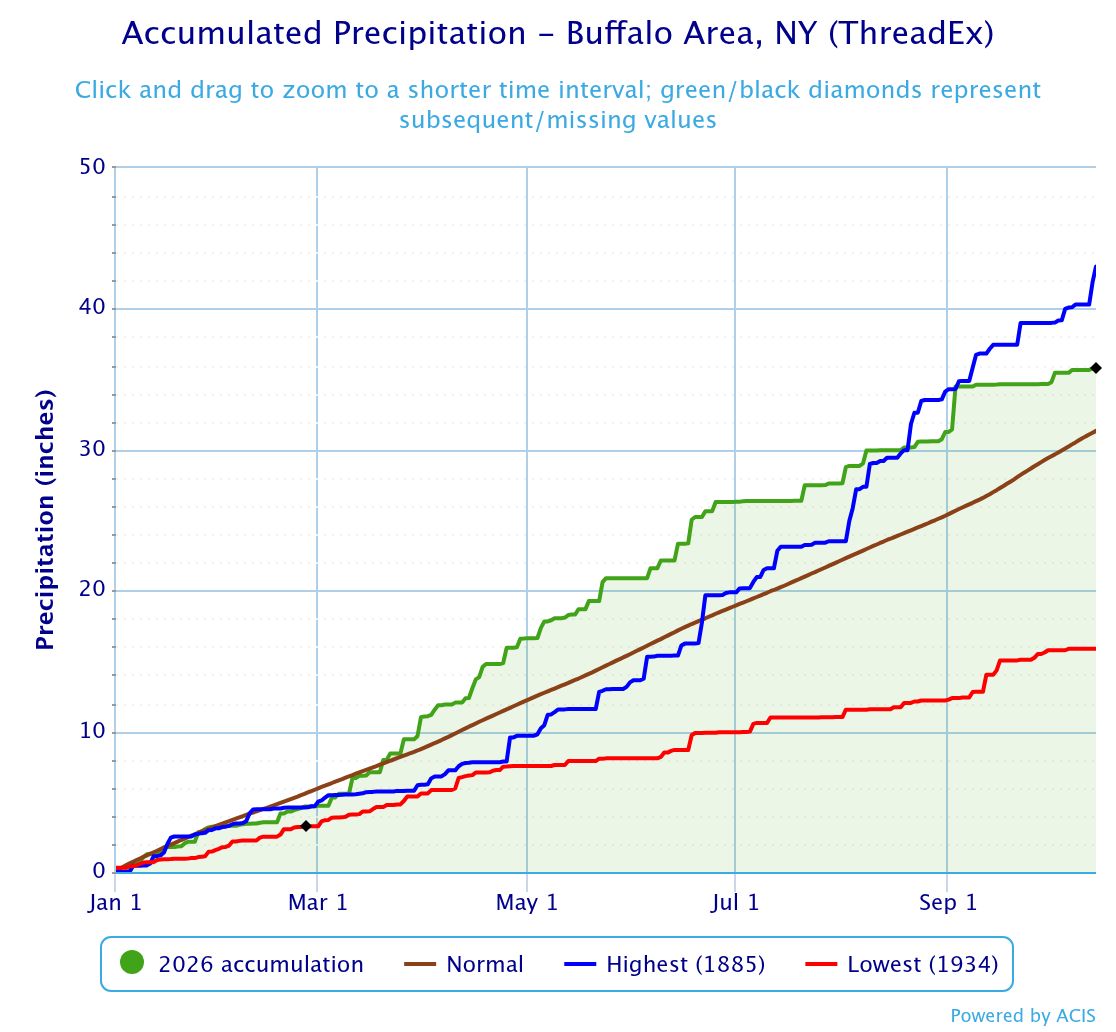
Climate graph provided by the National Oceanic and Atmospheric Administration and www.weather.gov.
Rain is crucial for vegetation and the invertebrates that need it. Those are the same creepy-crawlies that our bluebirds and other cavity nesting birds eat.
Unfortunately, that abundant rain made it difficult to check some of our nest boxes. Flooding around boxes prevented us from accessing some of them. On colder wet days, we don’t want to subject the occupants to the inclement weather, especially if there are hatching young.
The rain late in the season was especially difficult to deal with, but most of our boxes were empty by that time.
Nesting Data
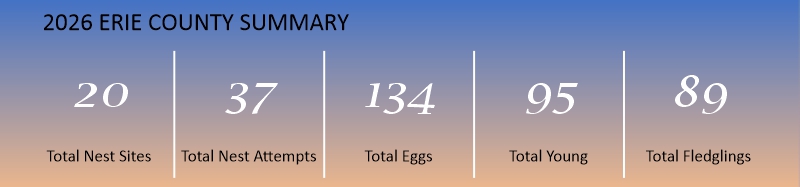
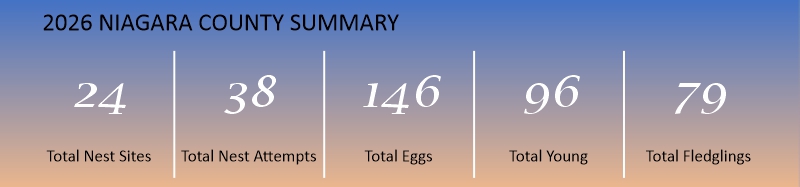
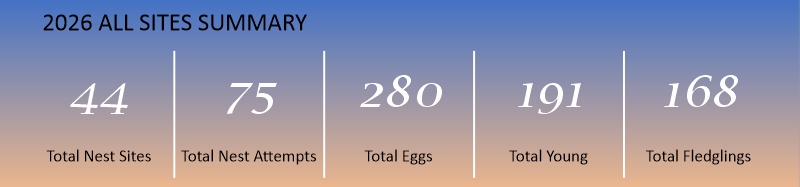
Inside The Numbers
These numbers are for all species of birds that used our boxes. We aim for Eastern Bluebird (Sialia sialis). Still, we also get Tree Swallows (Tachycineta bicolor), House Wrens (Troglodytes aedon), Black-capped Chickadees (Poecile atricapillus), and the invasive House Sparrows (Passer domesticus). These birds are cavity nesters, and our boxes provide convenient substitutes for natural cavities.
Of the numbers shown above, Bluebirds attempted 30 nests this season. A nest attempt is any nest with at least one egg present, but we also include nests constructed while monitoring the boxes, even if no eggs were laid, as actively used nests.
The bluebird nests produced 119 eggs, 74 nestlings, and 67 fledglings. Sixteen of the attempts produced at least one fully-fledged young. That’s a 53.33% success rate.
For the other species of birds, we aided in the fledging of 55 Tree Swallows and 46 House Wrens. We also successfully prevented any House Sparrows from fledging from our boxes, thanks to our active deterrent measures.
The Len Anderson Memorial Bluebird Trail has aided in the fledging of 630 Eastern Bluebirds since its inception in 2013. You can find the full collection of stats here.
You Can Help
Do you love birds—especially bluebirds—and sharing their stories? Do you have a nest box or bird feeder in your yard? Are you excited to learn something new from nature? If you’re nodding yes, you’re practically a Bluebird Ambassador already! So, why not make it official with the New York State Bluebird Society?
NYSBS is an excellent organization with knowledgeable bird lovers. Most importantly, we need bluebird lovers like you to help with bluebird conservation and share information with others. Use our Contact page to find out more, or go to NYSBS.org.